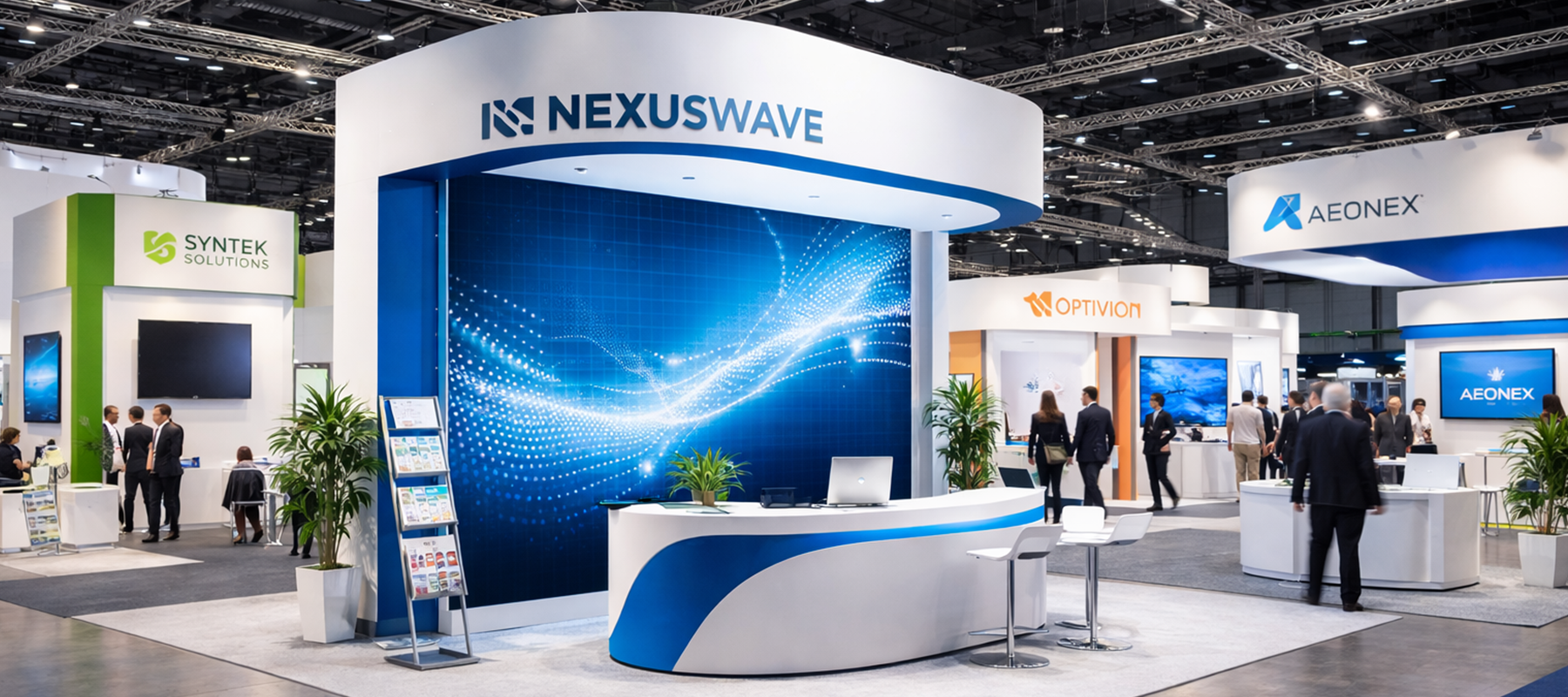
What Are Exhibition Displays?
Exhibition displays are purpose-built systems used within trade shows, expos, and exhibition venues to define a brand’s physical presence. They function as structured environments where companies present messaging, demonstrate products, and engage with visitors in a professional setting.
These displays are designed to fit within standardized booth spaces assigned by event organizers and must comply with venue regulations related to height limits, safety, materials, and accessibility. As a result, exhibition displays prioritize modularity, portability, and repeat usability rather than permanent construction.
Modern exhibition displays range from simple portable backwalls and fabric graphics to more complex modular systems incorporating counters, lighting, shelving, and digital elements. Their primary role is to support clear communication and efficient interaction while remaining practical to transport, assemble, and dismantle across multiple events.
Types of Exhibition Displays
Exhibition displays can be categorized based on structure, portability, and intended use. Understanding these categories helps exhibitors choose systems that align with their logistical needs, branding goals, and event requirements.
Portable Exhibition Displays
Portable exhibition displays are lightweight systems designed for ease of transport and fast setup. They often include collapsible frames, tension fabric graphics, or panel-based backwalls. These displays are commonly used by exhibitors attending multiple events who require flexibility and minimal handling costs.
Modular Exhibition Displays
Modular exhibition displays are built from standardized components that can be reconfigured into different layouts. This allows exhibitors to adapt the same system to various booth sizes or event formats. Modular systems offer a balance between customization and reusability while maintaining a consistent brand presentation.
Fabric Displays and Pop-Up Systems
Fabric-based exhibition displays use tensioned graphics stretched over frames to create seamless visual surfaces. Pop-up systems typically expand into shape and lock into place, reducing setup time. These displays are widely used for their clean appearance, portability, and efficient storage.
Backwall Displays and Structural Frames
Backwall displays form the primary visual backdrop of an exhibition space. They may consist of panel systems, fabric structures, or rigid frames designed to support large-format graphics. Structural frames can also support lighting, monitors, and accessories, increasing functionality within the booth.
Counters, Kiosks, and Accessories
Exhibition displays often incorporate supporting components such as counters, kiosks, shelving, and monitor stands. These elements provide functional surfaces for demonstrations, storage, or digital engagement while maintaining visual consistency with the main display system.
How Exhibition Displays Are Used at Trade Shows
Exhibition displays are used to define a company’s allocated space and create an organized environment for visitor engagement. They help guide traffic flow, highlight key messages, and support face-to-face interaction between exhibitors and attendees.
At most trade shows, exhibition displays must be installed and removed within specific time windows and handled according to venue procedures. This makes portability, durability, and efficient assembly essential factors in display design.
Exhibitors often reuse the same display systems across multiple events, updating graphics or configurations as needed. This approach allows brands to maintain consistency while adapting to different venues, audiences, and exhibition goals.
Exhibition Displays and Venue Considerations
Exhibition displays must comply with the technical and operational requirements of exhibition venues and convention centers. These requirements typically include maximum height restrictions, fire safety standards, approved materials, and accessibility guidelines.
Because venues vary in layout and regulations, exhibition displays are designed to be adaptable. Modular construction and standardized components allow systems to function across different environments while minimizing risk and complexity.
Logistical factors such as shipping, material handling, and on-site labor also influence the selection and design of exhibition displays. Efficient systems help reduce overall event costs and simplify coordination.
Exhibition Displays Versus Custom-Built Stands
Exhibition displays differ from fully custom-built stands in terms of construction, reuse, and logistics. While custom stands are often built specifically for a single event, exhibition displays are intended for repeated use across multiple shows.
This distinction makes exhibition displays more practical for exhibitors seeking long-term flexibility, predictable costs, and simplified transport. Modular and portable systems allow brands to achieve a professional presence without committing to permanent structures.
Regional and International Context
Exhibition displays are used globally, but their design and application often reflect regional standards and practices. In North America, standardized booth sizes and venue regulations strongly influence display systems, emphasizing portability and modularity.
International exhibitors participating in trade shows in the United States and Canada often rely on exhibition displays that align with local regulations and logistics requirements. Adaptable systems help ensure compliance while maintaining consistent brand presentation across regions.
Summary
Exhibition displays are essential tools for presenting brands and messages within trade show and exhibition environments. Designed for portability, adaptability, and repeated use, they balance visual impact with practical considerations such as logistics, venue regulations, and cost efficiency.
By understanding the types of exhibition displays available and how they are used, exhibitors can make informed decisions that support effective communication and long-term event participation.